
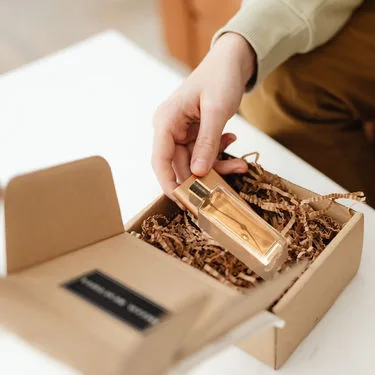
Shipping perfume internationally is regulated because most perfumes contain alcohol, which makes them a flammable liquid under transport rules. It can be done, but only through the right carrier service and with the right paperwork. This guide covers commercial shipments that start in the United States.
Quick answer
Alcohol-based perfume can ship internationally on an approved dangerous goods service, when the carrier accepts the exact product, packaging and destination. USPS does not allow alcohol-containing perfume in international mail, UPS Ground Saver is domestic only, and a commercial invoice does not replace dangerous goods paperwork.
Which carriers and services you can use
- USPS: prohibits alcohol-containing perfume in international mail.
- UPS: requires a signed agreement for its U.S.-origin International Dangerous Goods service, and only accepts approved commodities to approved destinations.
- DHL Express: describes a preapproval process for dangerous goods perfume shipments.
- UPS Ground Saver: not an international service. (See UPS Ground vs. Ground Saver.)
A domestic ground exception does not make a product eligible for international air. Treat international shipments as a separate approval.
How to ship perfume internationally, step by step
Step 1: Get the Safety Data Sheet and verify the classification
Request the current Safety Data Sheet (SDS) for the exact SKU from the manufacturer or supplier. Have a trained dangerous goods shipper verify the flash point and transport classification for the way it will travel. Alcohol-based perfume commonly falls under Class 3, flammable liquids. Record the verified classification in the SKU record.
Step 2: Confirm the carrier will accept it
Before booking, give the carrier the origin, destination, verified classification, bottle volume, units per carton and total quantity. Ask:
- Which service and packing instruction apply?
- Is a limited quantity provision available?
- How should the package be tendered?
Step 3: Check the destination’s import rules
Carrier acceptance does not mean the product can clear customs. Have the carrier or a customs broker confirm that the destination allows the commercial import and whether any permits, cosmetics documentation or labeling are required. Agree up front on who handles import clearance and who pays duties and taxes.
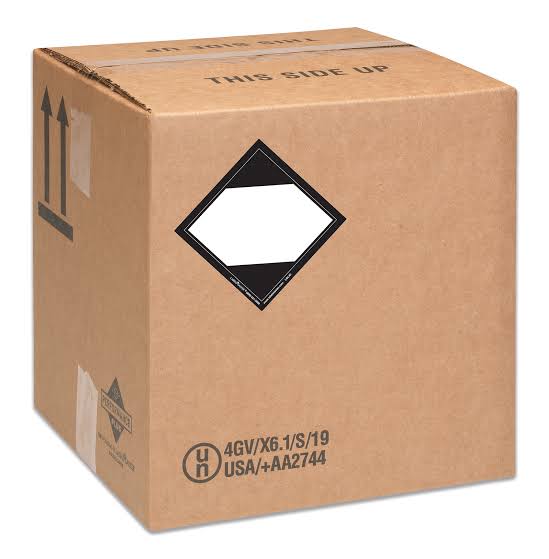
Step 4: Pack and label to the packing instruction
Check the quantity limits per inner container and per outer package, the packaging specifications, and the required marks and labels. Secure the closures and protect bottles from breaking or moving. Add absorbent material, secondary containment, orientation arrows or hazard labels where the instruction requires them. There is no universal bottle limit or label set, so always work from the instruction that applies to your shipment.
Step 5: Prepare the documents and hand it over
Complete the customs documents and the dangerous goods documents separately. For UPS shipments that need a dangerous goods declaration, follow UPS’s requirements for software, format, copies and multi-piece shipments. Before release, check that the SKU, quantities, package markings, invoice and declaration all match, then tender the package the way the carrier approved.
Documentation checklist
| Document | What it is for | What to know |
|---|---|---|
| Safety Data Sheet (SDS) | Supports classification and carrier review | Keep the current sheet for the exact formulation. It does not replace a shipping declaration. |
| Commercial invoice | Customs clearance and valuation | Include an accurate description, quantity, value and currency, country of origin, tariff classification, shipper and consignee, and delivery terms. |
| Carrier label or air waybill | Identifies and routes the shipment | Must include the dangerous goods information the carrier’s system requires. A parcel label alone does not clear dangerous goods. |
| Shipper’s Declaration for Dangerous Goods | Required for air shipments when applicable | Uses the verified description, hazard class, packing group, package count and type, quantity and packing instruction. |
| Electronic Export Information (EEI) | Export filing through AES, if required | Required when value exceeds $2,500 under a single Schedule B number (unless exempt), or when filing is mandatory regardless of value. |
| Destination-specific documents | Import requirements | May include proof of origin, an import permit or importer documents. Confirm with your broker before shipping. |
Describe the product clearly on the invoice. “Alcohol-based eau de parfum, 50 mL retail bottles” works. “Beauty products” does not.
How the EEI threshold works: $2,600 under one Schedule B number can trigger filing. $2,600 split across two classifications at $1,300 each does not trigger filing on value alone.
Common mistakes to avoid
- Copying the UN number or packing group from a different fragrance.
- Assuming an alcohol-free perfume is unregulated without checking.
- Assuming sample bottles are automatically exempt.
- Treating the commercial invoice as the dangerous goods paperwork.
- Assuming that because a carrier accepted the package, it will clear customs at the destination.
The question to ask your 3PL
If a 3PL ships perfume for you, ask: “Can you approve this exact perfume SKU, packaging configuration and destination under your dangerous goods carrier agreement, and who prepares and signs the paperwork?” Being able to print an international label is not the same as being able to ship a regulated product.
For how domestic perfume orders are handled, see perfume and fragrance fulfillment.
Frequently asked questions
Can you ship perfume internationally through USPS?
No. USPS prohibits alcohol-containing perfume in international mail.
Is perfume considered a dangerous good?
Alcohol-based perfume commonly falls under Class 3, flammable liquids. Verify the classification for each SKU using its Safety Data Sheet.
Can UPS ship perfume internationally?
Yes, through UPS’s International Dangerous Goods service, which requires a signed agreement and only covers approved commodities and destinations.
Are perfume samples exempt from dangerous goods rules?
Not automatically. Samples need to be verified like any other SKU.
Is a commercial invoice enough to ship perfume abroad?
No. The commercial invoice is for customs. Dangerous goods documents, such as the Shipper’s Declaration for air, are separate.
Dangerous goods and customs rules change and vary by carrier and destination. Confirm requirements with your carrier and customs broker before every new SKU or destination.